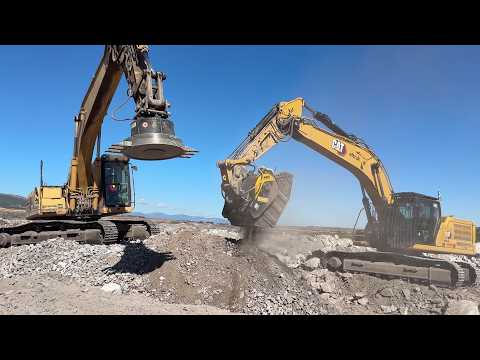
Cat 325 vs Hitachi ZX250: Operator Insights for Heavy-Duty Excavation
Practical guide for operators comparing Cat 325 and Hitachi ZX250, focusing on real-world use, common pitfalls, and expert tips manuals overlook.
Understanding the Power and Precision: Cat 325 vs Hitachi ZX250
When it comes to mid-sized excavators, the Cat 325 and Hitachi ZX250 are top contenders known for their reliability and performance. Experienced operators often face the challenge of choosing between these machines not just based on specs, but on how they perform under tough site conditions and prolonged usage. The Cat 325, particularly the Cat 325F L, delivers a potent mix of horsepower and hydraulic efficiency that shines on projects demanding both digging power and finesse. Meanwhile, the Hitachi ZX250LC-6 offers a robust hydraulic system with excellent boom control, making it favorable for operators who prioritize smooth, precise movements during intricate excavation tasks.
Hydraulics and Control Nuances Experienced Operators Know
Both machines feature advanced hydraulic systems, but the feel and responsiveness differ subtly, influencing operator productivity. The Cat 325F L's hydraulic system is tuned for rapid cycle times, which benefits trenching and loading operations. Seasoned operators leverage this by timing their bucket fills and swings to maximize fuel efficiency, a detail that isn’t emphasized in the manual. On the other hand, the Hitachi ZX250LC-6 exhibits a slightly softer hydraulic response, which, though it may feel less aggressive, provides smoother operation when working in sensitive environments or near utilities. Operators familiar with the ZX250 often reduce boom drift by adjusting pilot control settings, a tweak not highlighted in standard documentation.
Common Operator Mistakes and How to Avoid Them
Despite their capabilities, both the Cat 325 and Hitachi ZX250 have operator pitfalls that impact performance and maintenance. For the Cat 325, a frequent error is aggressive bucket crowding without allowing hydraulic pressure to stabilize. This practice stresses the hydraulic components and causes premature wear. Experienced operators mitigate this by modulating joystick inputs, maintaining steady pressure especially during high-impact digging.
Conversely, the Hitachi ZX250 operators sometimes underutilize the machine's swing brake system during tight maneuvering, leading to unnecessary track wear and control issues. Skilled operators engage the swing brake at appropriate moments to stabilize the upper structure, reducing track slip and improving positioning accuracy. Additionally, neglecting to monitor hydraulic oil temperature during demanding cycles is a shared mistake across both machines that can be avoided by paying close attention to onboard diagnostics.
Operator Comfort and Visibility: Practical Differences on Site
Operator endurance is critical during long shifts. The Cat 325F L cabin is designed with enhanced visibility, especially around the right-side boom and bucket area, which helps operators working in congested sites avoid blind spots. The ZX250LC-6’s cabin emphasizes noise reduction and vibration dampening, which experienced operators appreciate when working in urban or noise-sensitive environments. However, some operators note that the Hitachi’s monitor interface can be less intuitive, requiring a learning curve to access key diagnostics quickly.
Fuel Efficiency and Maintenance Realities in Field Conditions
Fuel consumption can vary dramatically based on operator technique and site demands. The Cat 325’s engine, a Cat C7.1, is optimized for fuel efficiency with auto idle and shutdown features that experts strategically use during idle periods to conserve fuel without sacrificing responsiveness. The Hitachi ZX250’s Isuzu engine delivers strong torque at low RPMs, favoring consistent power but potentially consuming more fuel if operators don’t adjust throttle control during light-duty tasks.
Maintenance-wise, the Cat 325F L benefits from widely available parts and a global service network, which can reduce downtime. Hitachi ZX250 operators should be vigilant about track tension adjustments and hydraulic filter changes; the machine’s sensitivity to track slack can lead to accelerated undercarriage wear if overlooked.
Choosing Between Cat 325 and Hitachi ZX250 Based on Jobsite Demands
For operators who prioritize rapid cycle times, aggressive digging, and easy parts access, the Cat 325F L stands out. Its hydraulic response and visibility make it ideal for heavy trenching, site prep, and loading. The Hitachi ZX250LC-6, with its smoother hydraulics and quieter cabin, excels in precision work and environments where operator comfort and fine control are paramount.
Ultimately, the decision hinges on the operator’s working style and the project’s specific demands. Seasoned operators balance these factors daily, often customizing control settings and operating habits beyond the manuals to push each machine’s capabilities while minimizing wear.