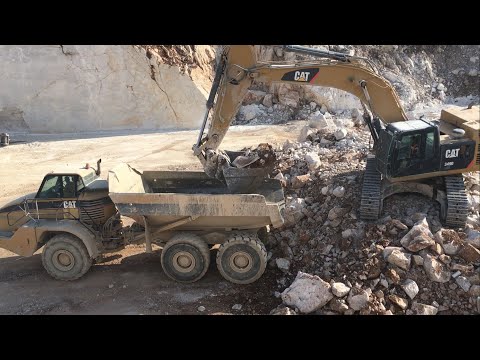
Cat 730 vs Volvo A30: What Buyers Must Know Before Investing
Explore critical factors in choosing between Cat 730 and Volvo A30 articulated trucks: costs, dealer insights, and operational nuances for pros.
Assessing Payload and Efficiency: Cat 730 vs Volvo A30
When evaluating articulated trucks like the Cat 730 and Volvo A30, payload capacity and fuel efficiency top the list for experienced operators and site managers. The Cat 730, with a nominal payload of 28 tons, offers robust power courtesy of its Cat C9.3 ACERT engine, known for torque and reliability in tough site conditions. In contrast, the Volvo A30 features a similar payload of 28 tons but pairs it with a Volvo D8 engine optimized for fuel economy without sacrificing performance.
While both models handle similar loads, the Cat 730’s design prioritizes durability and serviceability, reducing downtime on long hauls. The Volvo A30, however, shines in fuel savings, with operators noting up to 10% less consumption under comparable workloads. This efficiency can translate into significant savings over a machine's lifecycle, especially on large-scale projects.
Maintenance Demands and Hidden Costs to Consider Before Purchase
Beyond sticker price, hidden costs often shape the true expense of owning or renting an articulated truck. The Cat 730 benefits from a vast dealer network and readily available OEM parts, resulting in shorter repair times and less operational disruption. However, its maintenance intervals, particularly for hydraulic systems and transmission components, tend to be more frequent due to the heavy-duty nature of the machine.
Conversely, the Volvo A30 is engineered with extended service intervals and advanced diagnostics, which can lower maintenance frequency and associated labor costs. Yet, parts for Volvo trucks sometimes carry a premium price, and availability can be limited outside major metropolitan areas. This trade-off requires operators to weigh downtime costs versus parts expenses carefully.
Dealer Transparency and What They Often Don’t Disclose
When negotiating with dealers, both Cat and Volvo representatives emphasize reliability and machine uptime but often omit nuanced operational realities. For example, dealers may underplay the Cat 730’s higher fuel consumption under peak loads or the potential for more frequent hydraulic system maintenance. Similarly, Volvo dealers might not fully disclose the logistics challenges of parts replacement in remote job sites, which can extend downtime unexpectedly.
Another factor seldom highlighted is software update requirements. The Cat 730’s electronic control modules require periodic updates to optimize performance, and these updates sometimes necessitate dealer visits, adding to indirect costs. The Volvo A30’s telematics solutions provide excellent remote diagnostics but require subscription services that add to the operational budget.
Operational Environment Compatibility: Matching Truck to Site Demands
Experienced site managers know that the best articulated truck isn’t just about specs but how the machine handles the specific conditions of the operation. The Cat 730 excels in rugged, abrasive environments thanks to its reinforced frame and heavy-duty suspension design. It’s a go-to for mining or large-scale earthmoving where durability under abuse is paramount.
The Volvo A30, in contrast, offers a smoother ride with advanced suspension technology, making it well-suited for projects requiring operator comfort and precision, such as infrastructure development or urban construction. Its superior emissions profile also meets stricter regulations in sensitive zones, a factor that can influence rental or purchase decisions.
Final Thoughts: Aligning Machine Choice with Project Needs
Choosing between the Cat 730 and Volvo A30 articulated trucks involves more than comparing payloads and price tags. Experienced buyers should integrate considerations of fuel consumption, maintenance frequency, parts logistics, and operational environment compatibility into their decision matrix. Dealer insights can be valuable but require cross-verification against real-world reports and site-specific demands.
Ultimately, the decision hinges on aligning machine capabilities with project priorities — whether it’s the Cat 730’s rugged endurance or the Volvo A30’s efficiency and operator-centric features. Both trucks have earned their reputations, but understanding the hidden costs and operational nuances will ensure the right investment for your fleet.