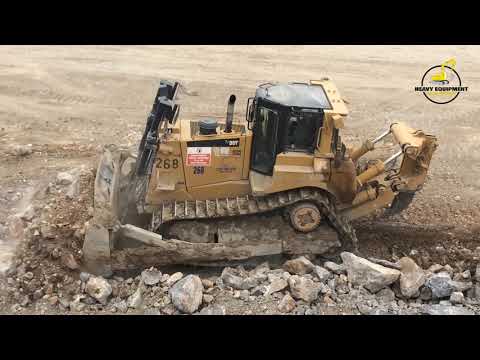
Dozer Push Capacity Guide for Experienced Operators
Master dozer push capacity with real-world tips, common pitfalls, and insights seasoned operators rely on beyond the manual.
Understanding Dozer Push Capacity Beyond the Spec Sheet
Experienced operators know the advertised push capacity of a dozer—often listed in tons or pounds—is just a starting point. Real-world conditions drastically affect what a machine can push effectively. Factors like soil type, blade configuration, and machine weight interact in complex ways. For example, a CAT D8T might list a push capacity around 28,000 pounds, but on soft clay versus compacted gravel, the effective capacity changes dramatically.
How Terrain and Soil Conditions Affect Push Capacity
One of the biggest oversights is neglecting terrain impact. A Komatsu D155AX-8 on firm, level ground will push far more material than on a steep slope or loose sand. Experienced operators adjust their expectations and blade angle accordingly. Pushing uphill requires more power, reducing effective push capacity. Operators familiar with the John Deere 850K note that its high ground clearance helps maintain traction on uneven terrain, which can improve push performance compared to lower clearance models.
Blade Selection and Setup: What Manuals Don’t Emphasize
Blade type and setup significantly influence push capacity. Straight blades are generally easier to push with but less efficient for spreading material. U-blades hold more material but increase resistance. Many operators underestimate how adding a power-angle-tilt (PAT) blade or using a semi-U blade can affect push force requirements. Adjusting blade tilt to match the material’s resistance can reduce stress on the drivetrain and improve throughput.
Traction and Undercarriage Maintenance Impact on Push Capacity
Experienced operators check undercarriage condition daily. Worn sprockets, tracks, or rollers reduce traction, lowering effective push capacity. For instance, an early model CAT D6N with 70% undercarriage wear will struggle to push the same load as a factory-new unit. Track tension also plays a critical role; too tight increases wear and power consumption, while too loose compromises traction. Skilled operators balance these factors to maximize push efficiency.
Common Mistakes That Lower Effective Push Capacity
Many operators overlook the importance of machine weight distribution. Adding rear attachments like rippers can improve traction but also increase fuel consumption and stress components if not used correctly. Overloading the blade beyond what the dozer can handle leads to slippage, overheating, and accelerated component wear. Seasoned site managers avoid pushing at maximum capacity continuously, instead cycling loads to preserve machine health and maintain steady progress.
Operator Technique: What Experienced Operators Know
Beyond machine specs, operator technique determines how close to the theoretical push capacity you actually get. Smooth, steady throttle application prevents track slip. Using engine rpm bands optimally—often in the mid to high range for pushing tasks—maximizes torque without overheating. Experienced operators with models like the Komatsu D85EX-18 use subtle blade height adjustments to manage resistance dynamically, keeping the machine balanced and pushing efficiently.