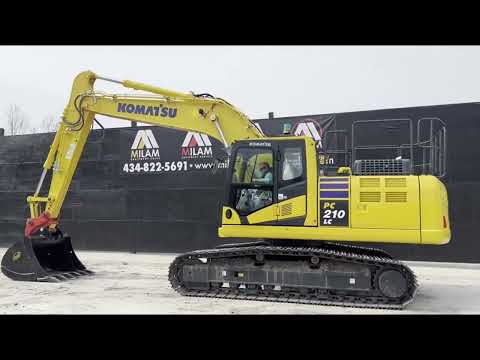
Excavator Counterweight Removal: Specs and Site Impact
Explore spec-driven insights on excavator counterweight removal for models like CAT 320, Komatsu PC210, and Hitachi ZX200, focusing on job site efficiency.
Understanding Excavator Counterweight Weights and Their Impact on Stability
The counterweight on excavators plays a critical role in balancing the machine during digging and lifting operations. For example, the Caterpillar 320D has a counterweight mass of approximately 4,200 kg (9,260 lbs), while the Komatsu PC210LC-11’s counterweight weighs around 4,000 kg (8,818 lbs). The Hitachi ZX200-6, on the other hand, uses a counterweight of roughly 3,900 kg (8,598 lbs). These numbers are not just specs on paper; they directly influence machine stability, lift capacity, and operational safety.
When considering excavator counterweight removal, understanding these weights is fundamental. Removing or changing the counterweight alters the center of gravity and can reduce the machine’s tipping resistance, which is crucial during heavy lifts or working on uneven terrain.
Counterweight Removal Procedures: Comparing CAT 320 and Komatsu PC210
On the CAT 320D, the counterweight is typically secured by a combination of bolts and locking pins designed for quick detachment. The removal time averages around 30-45 minutes with proper equipment, such as a forklift or crane. Operators often remove the counterweight to facilitate transport or when operating in confined spaces where weight reduction improves maneuverability.
In contrast, the Komatsu PC210LC-11 features a modular counterweight system with segments weighing about 1,000 kg each, allowing partial removal for more precise weight adjustment. The modular design speeds up removal time to approximately 20-30 minutes per segment with a suitable lifting device. This modularity is particularly advantageous on sites requiring frequent machine repositioning or transport.
Impact on Job Site Efficiency When Removing Counterweights
Removing the full counterweight on the Hitachi ZX200-6, which weighs nearly 4 tons, reduces machine weight substantially. This impacts fuel consumption positively when traveling short distances on site or when loading onto trucks. However, it also reduces lifting capacity and stability, limiting operational envelope.
On projects requiring frequent transport between tight urban sites, operators often remove counterweights to comply with road weight limits. The trade-off is increased setup time due to removal and reinstallation processes, which can range from 30 minutes to over an hour depending on the model and available lifting equipment.
Moreover, removing counterweights can reduce track wear and soil compaction where lighter machines are preferred. For instance, on sensitive landscaping projects, the ability to remove or partially remove counterweights helps maintain site integrity while retaining sufficient digging power.
Tools and Safety Considerations for Counterweight Removal
Experienced operators emphasize the importance of using certified lifting equipment rated above the counterweight’s weight. For the CAT 320D, a forklift rated for at least 5 tons or a mobile crane is standard. Komatsu’s modular segments often require smaller cranes or forklifts but demand precise rigging to avoid damage.
Safety protocols include ensuring the machine is on stable ground, chocking tracks to prevent movement, and following manufacturer torque specifications when reinstalling bolts. Neglecting these steps risks equipment damage or site accidents, especially given the substantial mass involved.
Finally, documenting removal and reinstallation procedures and training crews on these model-specific methods can optimize turnaround time and reduce downtime on complex projects.