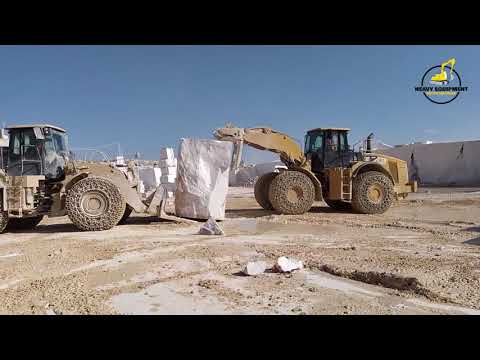
Cat 950 vs Komatsu WA380: Tackling Tough Loading Challenges
Explore how Cat 950 and Komatsu WA380 loaders address productivity and durability challenges in demanding construction environments.
Overcoming Productivity Bottlenecks on High-Volume Loading Sites
Experienced operators know that efficiency on site hinges on the loader's ability to handle high payloads swiftly without compromising stability. When moving bulk materials such as aggregate or demolition debris, delays caused by underperforming machines can cascade into costly downtime. The Cat 950 and Komatsu WA380 emerge as contenders in this space, each engineered to mitigate these bottlenecks.
Engine Power and Hydraulic Response: Key Differentiators
The Cat 950, particularly the 950GC and 950M variants, offers engine horsepower ranging from 190 to 240 HP, delivering robust torque that excels in continuous heavy lifting scenarios. Its Cat C7.1 engine coupled with advanced hydraulic systems ensures rapid bucket cycles and precise control, which reduces operator fatigue and boosts throughput.
By contrast, the Komatsu WA380-8 leverages a 202 HP SAA6D107E-1 engine, purpose-built for fuel efficiency and emissions compliance without sacrificing power. Its Komatsu Hydro-Mechanical Transmission (HST) provides smooth shifts and consistent tractive effort, critical when working on uneven terrain or maneuvering heavy loads.
Load Capacity and Stability: Matching Machine to Material
With an operating weight hovering around 32,000 kg for the Cat 950M, it can handle bucket capacities up to 4.2 m³, making it well-suited for dense materials like crushed stone or recycled asphalt. The machine's optimized center of gravity and heavy-duty axles contribute to enhanced stability during uphill hauls or when working on slopes.
The WA380-8, slightly lighter at approximately 28,000 kg, features bucket sizes up to 3.5 m³ but compensates with superior maneuverability in tighter job site conditions. Its articulated frame design offers exceptional steering angles and reduced tire wear, a significant advantage when frequent repositioning is necessary.
Operator Comfort and Control: Reducing Fatigue in Long Shifts
Long hours in the cab demand ergonomics that preserve operator alertness. The Cat 950M's cabin integrates advanced climate control, adjustable suspension seats, and intuitive joystick controls, minimizing strain during repetitive motions. Its visibility enhancements, including rearview cameras and large glass panels, improve safety when working in congested areas.
Komatsu's WA380-8 cab emphasizes noise reduction and vibration dampening. The digital interface provides real-time machine diagnostics and customizable settings, allowing operators to tailor performance to site conditions. Both machines have implemented electronic aids to assist in load management and bucket positioning, enhancing precision.
Maintenance Considerations: Maximizing Uptime and Lifecycle
For site managers, maintenance intervals and ease of service are critical. Cat's 950 series benefits from centralized service points and predictive analytics through Cat Connect, enabling proactive interventions before issues escalate. This reduces unscheduled downtime, a key factor in high-demand projects.
Komatsu's WA380-8 also boasts accessible maintenance features and employs Komatsu CARE, offering complimentary scheduled maintenance and extended warranty options that contribute to lower total cost of ownership. Its robust design minimizes component wear, which is vital in abrasive environments.
Matching the Loadout to Site Demands
Choosing between the Cat 950 and Komatsu WA380 necessitates aligning machine capabilities with specific operational challenges. The Cat 950M shines in scenarios demanding heavy payloads and long haul distances, where power and stability are paramount. Conversely, the WA380-8 excels in sites where maneuverability and fuel efficiency are prioritized without sacrificing sufficient capacity.
Ultimately, understanding the nuances of each loader's design and performance parameters enables operators and managers to optimize their fleet for productivity and cost efficiency under varying job site conditions.