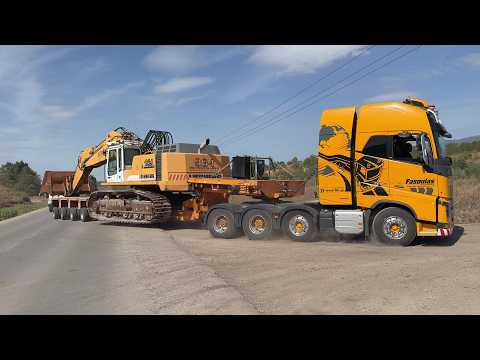
Excavator Breakout Force: Solving Tough Digging Challenges
Explore how excavator breakout force impacts performance on demanding sites and discover machine choices that overcome digging obstacles efficiently.
Understanding Excavator Breakout Force in Challenging Conditions
On many job sites, operators face the stubborn reality of compacted soils, dense rock layers, and frozen ground that resist penetration. These conditions demand more than just power—they require an excavator with sufficient breakout force to break free material efficiently and maintain productivity. When an excavator lacks the necessary breakout force, operators struggle with slow digging cycles, excessive wear on attachments, and increased fuel consumption. These challenges can delay schedules and inflate operational costs.
How Breakout Force Influences Excavator Performance
Breakout force refers to the maximum force an excavator’s bucket can exert to pry or break material loose from the ground. It’s a critical spec that directly affects how effectively the machine can initiate digging, especially in firm or rocky substrates. Higher breakout force translates into stronger digging power, enabling operators to tackle difficult materials without relying solely on brute engine power or repeated attempts.
For experienced operators, understanding breakout force helps in selecting the right equipment for site conditions. Machines with robust hydraulic systems and optimized linkage geometry deliver superior breakout force, allowing them to handle tasks that would otherwise require specialized attachments or additional equipment.
Model Insights: Machines Built for High Breakout Force
The CAT 336 hydraulic excavator exemplifies how engineered breakout force enhances site productivity. With a breakout force exceeding 70,000 lbs, it excels in heavy-duty applications such as quarrying and trenching through dense materials. Its advanced hydraulic system maintains consistent force throughout the digging cycle, reducing operator fatigue and improving cycle times.
Another noteworthy model is the Komatsu PC490LC-11. This excavator delivers breakout forces in the range of 65,000 to 68,000 lbs, combining high power with fuel efficiency. Its reinforced boom and arm design contribute to higher breakout forces without sacrificing stability, making it ideal for tough excavation projects where material resistance challenges conventional machines.
The Volvo EC480E also stands out with its breakout force capabilities near 67,000 lbs. Volvo’s focus on hydraulic optimization and attachment compatibility allows operators to choose specialized buckets that maximize breakout force application, improving performance in frozen or rocky terrain.
For medium-sized excavators, the Doosan DX300LC-5 offers breakout forces around 40,000 lbs, striking a balance between maneuverability and power. This model is preferred on urban sites or projects with mixed soil profiles where strong breakout force is needed without the footprint of larger machines.
Choosing the Right Breakout Force for Your Site Challenges
Operators and site managers must evaluate breakout force requirements based on ground conditions and project scope. Inadequate breakout force can lead to equipment stalling or inefficient digging, while overspecifying can increase costs unnecessarily. For instance, soft soils typically require less breakout force, allowing for lighter machines, whereas rocky or compacted sites demand excavators with higher breakout forces.
Integrating breakout force considerations with other machine features—such as hydraulic flow rates, boom reach, and attachment compatibility—ensures that the excavator can meet both the mechanical and operational demands of the project. Experienced operators often leverage breakout force data to optimize bucket selection and digging techniques, reducing cycle times and minimizing wear.
Maximizing Excavator Breakout Force in Practice
Beyond model selection, maximizing breakout force involves proper maintenance and operator technique. Hydraulic systems must be kept in peak condition to sustain maximum pressure and flow rates essential for breakout force. Additionally, selecting the right bucket type and ensuring correct attachment installation can amplify the effective breakout force applied to the material.
Operators skilled in matching breakout force with site conditions can adjust digging angles and leverage to exploit the machine’s maximum breakout capacity. This approach not only speeds excavation but also preserves equipment longevity by avoiding excessive strain.