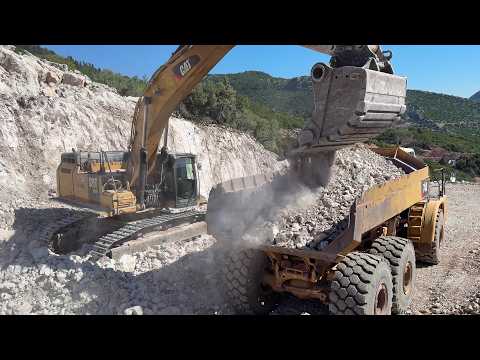
Volvo A40 vs Cat 740: Articulated Truck Specs Compared
A detailed spec comparison between Volvo A40 and Cat 740 articulated trucks for heavy-duty site performance and operational efficiency.
Engine Power and Fuel Efficiency: How the Volvo A40 and Cat 740 Compare
The Volvo A40F is powered by a Volvo D16 engine delivering 476 hp at 1,900 rpm, while the Cat 740 employs a Cat C27 ACERT engine rated at 525 hp at 1,800 rpm. Though the Cat 740 boasts higher horsepower, the Volvo A40F's electronically controlled engine optimizes fuel consumption across varying load conditions. On-site, this translates to slightly lower fuel use for the A40F during consistent haul cycles, directly impacting operational costs over time.
Payload Capacity and Load Distribution: Maximizing Productivity
The Volvo A40F has a rated payload capacity of 39.5 tons, closely matched by the Cat 740's 41-ton rating. Despite the Cat 740's nominally higher capacity, the Volvo’s advanced suspension system ensures a more even load distribution, reducing tire wear and stress on chassis components. For operators, this means fewer maintenance interruptions and sustained productivity on uneven or rugged terrain.
Transmission and Drivetrain: Operational Smoothness Under Load
The Volvo A40F features a 14-speed Volvo Powertronic transmission with an automated shift mode, allowing precise gear changes optimized for fuel economy and torque management. In contrast, the Cat 740 utilizes a 7-speed planetary power shift transmission. The greater number of gears in the Volvo facilitates smoother power delivery and better adaptability across different grades and haul road conditions, providing operators with enhanced control during challenging maneuvers.
Dump Body Design and Cycle Times: Impact on Jobsite Throughput
The Volvo A40F's dump body has a volume of approximately 24.5 cubic yards, engineered with optimized geometry for quick unloading and minimal material retention. The Cat 740 offers a similar volume but includes a high-lift hoist option that increases dumping angles for faster discharge on steep gradients. While the Cat's high-lift design can reduce cycle times on certain sites, the Volvo’s hydraulic system provides smoother and more consistent dump cycles, reducing operator fatigue during repetitive tasks.
Operator Comfort and Controls: Enhancing Productivity and Precision
Volvo’s A40F cab emphasizes visibility and ergonomics with adjustable seating and a user-friendly joystick control system that integrates transmission and dump functions. The Cat 740 cab features advanced ride control with active suspension and a multifunctional display. Experienced operators find that Volvo’s interface facilitates quicker acclimation and reduces fatigue, especially during long shifts, whereas Cat’s ride control excels in mitigating vibration on rough terrain.
Maintenance Intervals and Serviceability: Minimizing Downtime
Volvo’s design prioritizes easy access to engine and drivetrain components, allowing routine maintenance every 500 hours with extended intervals for oil and filter changes. The Cat 740 demands service at similar intervals but features modular components that can be swapped rapidly. On busy projects where downtime costs are critical, Volvo’s longer maintenance intervals can provide a logistical advantage, whereas Cat’s modularity supports faster repairs when breakdowns occur.
Summary of Operational Implications for Site Managers
When comparing the Volvo A40 vs Cat 740, site managers must weigh horsepower against fuel efficiency, payload against chassis longevity, and transmission complexity against operational smoothness. The Cat 740’s higher raw power and payload capacity may appeal to sites requiring maximum tonnage per cycle, particularly on steep grades benefiting from the high-lift dump body. Conversely, the Volvo A40F’s focus on fuel economy, operator comfort, and longer maintenance intervals can lead to lower total cost of ownership and sustained productivity in varied terrain.