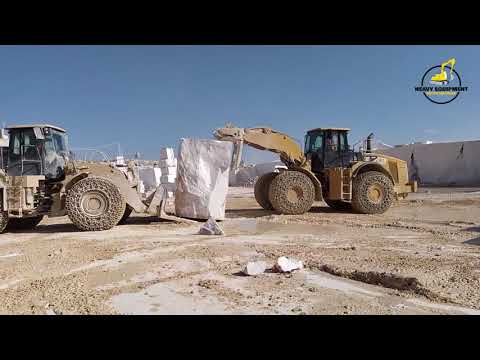
Wheel Loader Tipping Load: Managing Stability Challenges on Site
Explore how understanding wheel loader tipping load enhances operational safety and efficiency on tough construction sites. Key models break down solutions.
Recognizing Stability Risks in Wheel Loader Operations
Seasoned operators know that the stability of a wheel loader is not just about weight but about how that weight interacts with load positioning and terrain. The challenge often arises when handling heavy loads at extended reach, especially on uneven ground. Misjudging the tipping load can lead to dangerous rollovers or equipment damage, creating costly downtime and safety hazards.
How Wheel Loader Tipping Load Metrics Influence Equipment Selection
The tipping load defines the maximum load a wheel loader can safely carry without losing balance and tipping forward. This specification is critical when selecting a machine for demanding site conditions. For example, the Caterpillar 950 GC is engineered with a tipping load that balances power and stability, making it ideal for moderate loading tasks on stable ground.
On the other hand, the Volvo L120H offers a higher tipping load capacity, thanks to its advanced chassis design and optimized weight distribution. This allows operators to work with heavier materials or reach further without compromising safety, particularly in quarry or heavy earthmoving applications.
Equipment Features That Mitigate Tipping Load Challenges
Modern wheel loaders incorporate technology to assist operators in managing tipping load risks. The Komatsu WA320-8, for example, integrates an onboard Load and Stability Management system that provides real-time feedback on load weight and positioning. This system helps prevent overloading beyond the rated tipping load, alerting operators to adjust before stability is compromised.
Additionally, the John Deere 524L’s robust frame and low center of gravity contribute to a higher tipping load margin. This design reduces the likelihood of forward tip-overs when lifting heavy loads at the maximum reach, especially useful in tight or uneven work environments.
Operator Techniques to Maximize Stability Within Tipping Load Limits
Even with advanced machine design, operator skill remains paramount. Experienced operators adjust their approach based on the wheel loader tipping load specifications. They avoid lifting loads beyond rated capacities, keep buckets close to the machine when moving, and adjust travel speed according to terrain conditions.
On sloped surfaces, operators may need to reposition the loader or reduce the load to maintain stability. Precision in load distribution within the bucket also plays a role; uneven loads can drastically reduce effective tipping load, increasing risk.
Choosing the Right Wheel Loader for Site-Specific Stability Needs
Site managers tasked with fleet selection must consider the tipping load in conjunction with operational demands. For projects involving heavy material handling on uneven terrain, a machine like the Volvo L120H or Komatsu WA320-8 can offer the necessary tipping load capacity and system features to maintain safety and productivity.
Conversely, where loads are lighter but frequent, and terrain is more predictable, models like the Caterpillar 950 GC provide a cost-effective balance between power and stability, minimizing the risk of tipping incidents.
Understanding the nuances of wheel loader tipping load equips operators and managers to make informed decisions, reducing accidents and downtime while optimizing workflow efficiency.