
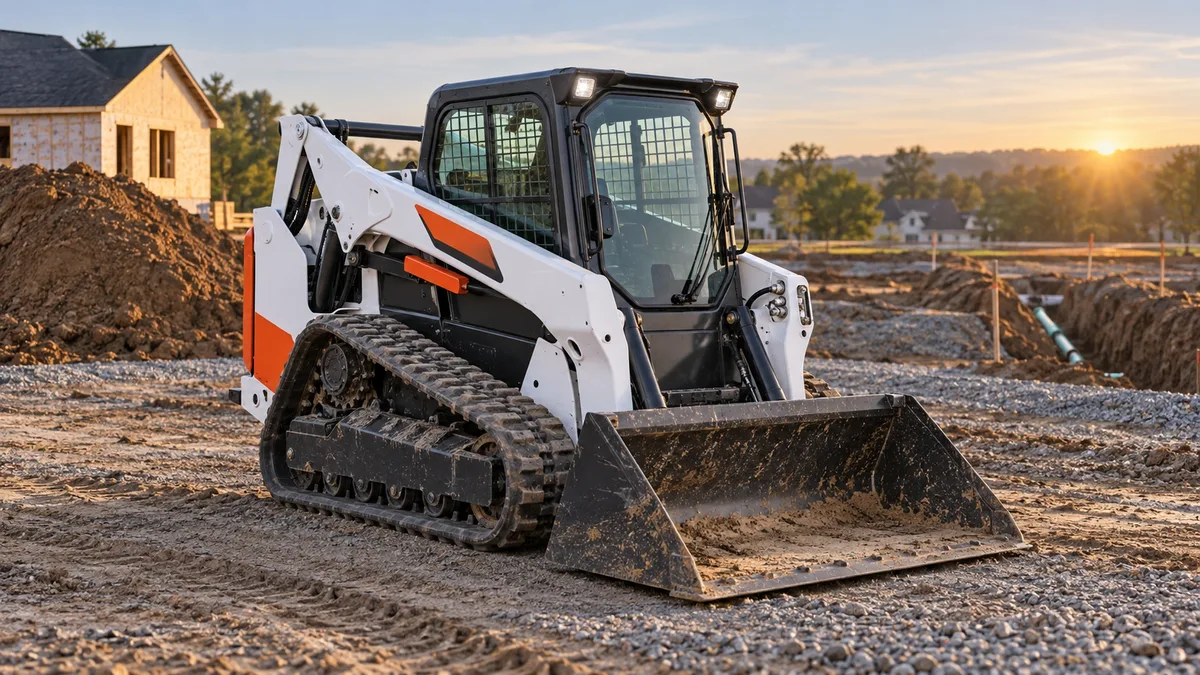
Bobcat T76-2 Cost Context: A 74 HP CTL Is Bought for Utilization
The Bobcat T76-2 is not a cheap machine to own just because it is compact. It is a 74 hp vertical-lift compact track loader with a published 9,592 lb operating weight, 2,900 lb rated operating capacity with solid undercarriage, 8,285 lb tipping load, 31.7 gal fuel tank, 23.3 gpm standard auxiliary flow, and 30.3 gpm high-flow auxiliary hydraulics. Those numbers put it in the middle of a useful contractor class: large enough for grading, pallet handling, soil conditioning, brush work and snow support, but still small enough for residential access, lighter hauling plans and mixed-use crews.
For cost planning, the key question is not simply "what does a Bobcat T76-2 burn per hour?" The better question is what the machine is doing during the paid hour. A T76-2 running a bucket in loose topsoil, moving pallets across a yard, pushing snow, carrying a soil conditioner, or powering a brush cutter will not have the same fuel use, track wear or maintenance pattern. Heavy Equipment Hub uses a 2.1 gal/hr planning fuel burn for a normal mixed-duty estimate, but a real job-cost sheet should adjust that number for load factor, idle time, attachment demand and underfoot conditions.
Quick Answer: Planning Cost Per Hour
A practical Bobcat T76-2 operating cost model should begin around fuel, rubber track reserve, planned maintenance, wear parts, attachments, depreciation, finance cost, insurance, hauling, and utilization. For a mixed contractor fleet, a rough editorial planning number of $42/hr can be used as a starting point before operator labor, markup and profit. That number is not an OEM guarantee and should not replace dealer quotes, service history, fuel logs or your own rental-rate math.
| Cost Line | Planning Input | Why It Moves |
|---|---|---|
| Fuel | 2.1 gal/hr mixed-duty basis | Snow, grading, brush cutting and high-flow attachment work can raise load factor. |
| Rubber tracks | Hourly reserve, not just replacement price | Asphalt, demolition debris, curb turns and rocky fill shorten track life. |
| Maintenance | 500-hour planning interval plus daily cleaning | Filters, fluids, rollers, cooling airflow and attachment couplers need records. |
| Attachments | Separate reserve by tool | Brush cutters, cold planers and soil conditioners add teeth, blades, hoses and coupler wear. |
Fuel Burn: Use Load Factor, Not One Fixed Number
The T76-2's 74 hp rating gives enough power for everyday CTL work without moving into the highest fuel-burn class. Light bucket cleanup, pallet work and finish grading may sit below the planning average, especially when idle time is controlled. Continuous pushing, deep grading, mulching, snow stacking, high-speed travel and hydraulic attachment work can move the number above the average quickly. A better estimator splits the week into low, medium and high load hours instead of charging every hour at the same fuel assumption.
Idle time deserves its own line. Compact loaders spend real time waiting on trucks, survey layout, material delivery, driveway access, labor crews and attachment changes. If the hour meter runs while the machine is waiting, fuel burn may look reasonable but cost per productive yard, pallet or driveway can be poor. For rental fleets and owner-operators, idle percentage should be tracked with the job notes because it is one of the easiest costs to improve without changing equipment.
Rubber Track Reserve Is the Cost Many Owners Underestimate
A wheeled skid steer often wins on hard surfaces, but the Bobcat T76-2 is chosen because tracks add flotation, traction and grading control. That advantage carries a real reserve cost. Track life changes with operator behavior, turning style, surface, debris, slope, track tension, alignment and cleaning discipline. Spinning, counter-rotating on concrete, running over demolition scrap and carrying packed mud around rollers can eat track value faster than fuel.
Build the reserve from your expected track replacement cost divided by realistic hours in your soil and surface conditions. Then add roller, idler and sprocket inspection to the maintenance process. A clean, properly tensioned undercarriage can make the T76-2 feel cheaper per hour than a neglected machine with the same purchase price.
High-Flow Attachments Need Their Own Math
The T76-2 has a published 30.3 gpm high-flow auxiliary hydraulic value when properly equipped. That matters for soil conditioners, brush cutters, snow blowers, trenchers, cold planers and other hydraulic tools, but it should not be treated as free capacity. High-flow work increases heat load, hose and coupler wear, filter demand, fuel use and operator sensitivity to maintenance condition. Before quoting high-flow attachment work, confirm the machine actually has the high-flow package, correct electrical controls, case drain when required, proper couplers and clean cooling airflow.
| Job Type | Cost Risk | Bid Note |
|---|---|---|
| Landscape grading | Track wear, bucket edge wear and idle time | Charge by production target, not just machine hours. |
| Brush cutting | Fuel, hydraulic heat, blades, debris and cooling restriction | Inspect cooler screens and attachment condition daily. |
| Snow removal | Cold starts, salt exposure, cutting edges and travel time | Separate standby, storm hours and post-storm cleanup. |
| Pallet and material handling | Track wear on hard surfaces, lift-arm pins and fork damage | Confirm rated capacity, load center and ground condition. |
Maintenance Reserve: Do Not Treat Compact Equipment as Disposable
For the Bobcat T76-2, service cost should include engine oil, fuel filtration, hydraulic filters, air filters, grease, oil sampling where used, cooling package cleaning, drive inspection, track adjustment, roller inspection, coupler inspection and attachment hose checks. Compact loaders are often shared across crews, which means small defects can travel from job to job until a larger failure appears. The cost model should include documentation time because written inspections protect the machine and the estimate.
Ownership Cost and Utilization
Depreciation and finance cost depend on purchase price, interest rate, resale value, annual hours and how quickly the machine becomes outdated for your attachment mix. A contractor running 900 productive hours per year spreads fixed cost very differently from an owner using the same loader 250 hours per year. Low utilization is where compact track loaders can become expensive: the machine still needs insurance, storage, service, battery care, track aging checks and financing whether it works daily or sits.
When the T76-2 Makes Financial Sense
The T76-2 makes the most sense when it replaces hand work, reduces site damage, carries enough lift capacity for daily materials, keeps a finish-grade crew productive, or powers attachments that would otherwise require a second machine. It is less attractive when the job is mostly hard-surface travel, long-distance roading, continuous quarry loading, or deep excavation better suited to an excavator. Use the Bobcat T76-2 specs page with this cost guide and the fuel operating cost calculator to test your own fuel price and annual hours.
Internal Research Path
Start with the model profile, then compare the T76-2 against compact equipment pages with similar operating weight, horsepower, rated operating capacity and hydraulic flow. Next, separate bucket-only work from high-flow attachment work, because those two uses create very different costs. Finally, connect the estimate to maintenance records and jobsite notes instead of relying on one universal hourly number.
Source and Verification Notes
This article uses the Heavy Equipment Hub Bobcat T76-2 model profile, Bobcat public product specifications, and editorial cost-planning assumptions. Fuel burn, cost per hour, track reserve and attachment reserve are planning estimates, not OEM-guaranteed values. Confirm serial-specific configuration, high-flow option, attachments, service procedures, warranty status and dealer documentation before buying, renting, hauling or bidding work.

