
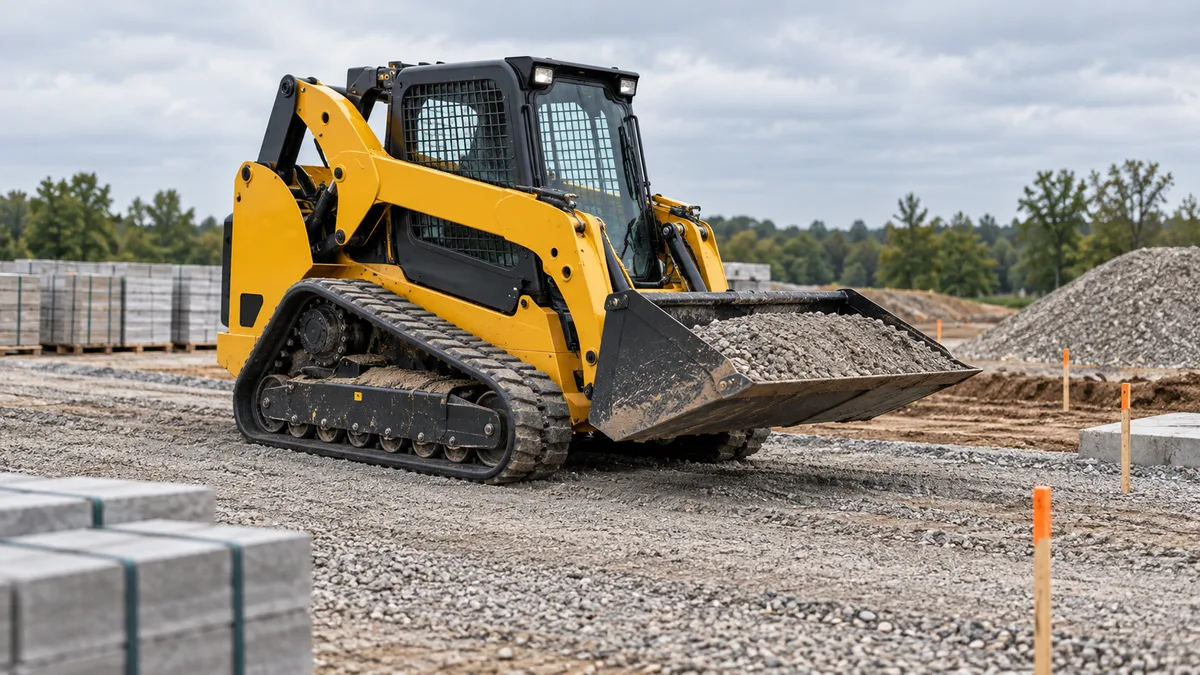
John Deere 333 P-Tier Cost Context: High Flow Changes the Estimate
The John Deere 333 P-Tier is a large-frame compact track loader built for work where a smaller CTL may run out of hydraulic capacity, rated operating capacity or breakout force. The current Heavy Equipment Hub model profile lists 105.8 hp net power, 12,183 lb operating weight, 3,850 lb rated operating capacity, 11,000 lb tipping load, 25 gpm standard hydraulic flow, 44 gpm optional high flow, 3,500 psi system pressure, 36 gal fuel capacity and Final Tier 4 / EU Stage V emissions. Those values make the 333 P-Tier a serious attachment platform, but they also mean the cost per hour should be built differently from a mid-frame rental loader.
High-flow CTL ownership has two personalities. With a bucket, forks or light grading attachment, the machine may behave like a strong compact loader with good lift capacity and traction. With a mulcher, cold planer, snow blower, trencher, soil conditioner or heavy hydraulic tool, fuel burn, heat load, coupler wear, hydraulic filtration demand, track wear and maintenance documentation become more important. Heavy Equipment Hub uses a 3.0 gal/hr mixed-duty planning fuel burn for the 333 P-Tier, but attachment-heavy work should be estimated with a higher load factor and a separate attachment reserve.
Quick Answer: Cost Per Hour Starting Point
A practical John Deere 333 P-Tier estimate should include fuel, DEF where applicable, rubber tracks, undercarriage wear, hydraulic maintenance, cutting tools, attachment wear, planned service, depreciation, financing, insurance, hauling and utilization. For a mixed owner-operator or contractor fleet, an editorial starting point around $52/hr before labor, overhead, markup and profit is reasonable for planning. Dedicated high-flow work can exceed that when fuel, tool wear and downtime risk are fully counted.
| Cost Line | Planning Basis | 333 P-Tier Watchpoint |
|---|---|---|
| Fuel | 3.0 gal/hr mixed-duty basis | High-flow tools and heavy pushing can move fuel above a normal bucket-work estimate. |
| Rubber tracks | Track and undercarriage reserve per operating hour | Large-frame weight and hard-surface turning make track records important. |
| Hydraulics | Filter, fluid, coupler and cooling reserve | Optional 44 gpm work should be treated as a high-heat duty cycle. |
| Attachments | Separate reserve by attachment type | Mulcher teeth, planer bits, broom wafers, blades and hoses can outrun base machine costs. |
Standard Flow vs Optional High Flow
The 333 P-Tier's standard hydraulic flow is useful for common attachments, but the optional 44 gpm package is the reason many buyers look at this model. That optional flow should be matched to actual attachment requirements, not just used as a marketing number. Some attachments need flow, some need pressure, some need case drain routing, and some need electrical controls or cooling discipline. If the job depends on a mulcher, planer or snow blower, confirm the attachment chart, coupler style, control package, hose routing and operator setup before quoting production.
Cost also changes by duty cycle. A few high-flow hours per week may justify the larger loader because it avoids subcontracting or renting. Daily high-flow work should be priced with more conservative maintenance reserve, more frequent inspections and a clearer downtime plan. Hydraulic heat complaints, slow tool recovery and contaminated couplers are not just repair issues; they are bid risk.
Fuel and DEF Planning
Fuel use for the 333 P-Tier is driven by horsepower demand, hydraulic load, pushing resistance, travel, idle time and operator style. A large-frame CTL may be efficient when it completes a job faster than a smaller unit, even if its hourly fuel burn is higher. That is why the estimate should track cost per acre, cost per ton, cost per driveway, cost per pallet movement or cost per finished grade area when possible. Hourly fuel cost alone can make a productive high-capacity machine look worse than it really is.
If your market and machine configuration uses aftertreatment fluids or emissions-related service items, keep those costs visible rather than hiding them in maintenance. Small emissions expenses are manageable; surprise downtime from poor fuel handling, ignored warnings or contaminated fluids is not.
Track Reserve for a 12,183 lb CTL
At 12,183 lb operating weight, the 333 P-Tier sits in a heavier CTL class. That weight helps stability and rated capacity, but it also makes track discipline important. Counter-rotation on pavement, working on demolition debris, running loose tracks, carrying packed clay, and repeated high-speed turns can shorten track and roller life. Estimate rubber tracks as a cost-per-hour reserve and inspect the undercarriage before the machine starts high-flow jobs where downtime is expensive.
| Application | Cost Driver | Estimate Separately? |
|---|---|---|
| Brush cutting and mulching | Fuel, hydraulic heat, teeth, guarding, debris cleaning and track cuts | Yes, use a high-load attachment rate. |
| Cold planing | Hydraulic load, planer bits, water support, surface travel and cleanup | Yes, include tool wear and support labor. |
| Snow work | Cold starts, salt exposure, cutting edges, tires or tracks, travel and standby | Yes, separate standby from active storm hours. |
| Forks and pallets | Lift capacity, load center, track wear on hard surfaces and idle time | Usually, if material handling dominates the week. |
Maintenance Reserve and Inspection Habit
Planned maintenance should cover engine service, fuel filtration, hydraulic filters, air filtration, grease, oil sampling where used, cooling package cleaning, track tension, rollers, idlers, sprockets, final-drive checks, lift-arm pins, bucket pins, coupler lockup and electrical attachment controls. High-flow machines also need more careful coupler hygiene because dirt in the wrong fitting can turn into heat, restriction or contamination.
For a 333 P-Tier that earns money with attachments, keep a short work-order note for every high-flow job: tool used, hours, material, ambient temperature, operator complaint, hydraulic temperature issue, hose damage, teeth or blade wear and any fault code. This is not paperwork for its own sake. It lets you separate a machine problem from a tool problem and keeps one bad attachment from making the entire loader look unreliable.
Depreciation, Financing and Utilization
The larger the CTL, the more sensitive the ownership calculation becomes to utilization. A high-spec 333 P-Tier working steady production hours can spread depreciation and finance cost across real revenue. The same loader used occasionally for light bucket work may be overcapitalized. Before buying, compare expected annual hours, likely resale value, dealer support, attachment revenue, hauling needs and whether a smaller CTL plus occasional rental would cover the same work.
When the 333 P-Tier Makes Financial Sense
The 333 P-Tier makes financial sense when the job mix needs rated operating capacity, high-flow hydraulics, breakout force and traction often enough to justify the larger platform. It is strongest for contractors who can keep it busy with land clearing, site preparation, snow, utility support, grading and hydraulic tools. It is weaker as a pure light-duty yard loader, because the machine carries more fixed cost than smaller CTLs. Use the John Deere 333 P-Tier specs page, the equipment comparison tool and the fuel cost calculator together before setting internal rates.
Internal Research Path
Start with the 333 P-Tier model profile, then separate standard-flow jobs from optional high-flow jobs. Compare it against similar large-frame CTLs by rated operating capacity, hydraulic flow, tipping load, transport weight and attachment support. Finally, connect job notes to fuel logs and undercarriage inspections so the cost model reflects actual use instead of a generic compact-loader average.
Source and Verification Notes
This article uses the Heavy Equipment Hub John Deere 333 P-Tier model profile, John Deere public product specifications, and editorial cost-planning assumptions. Fuel burn, hourly operating cost, attachment reserve and track reserve are planning estimates, not OEM-guaranteed values. Confirm serial-specific configuration, hydraulic package, attachment compatibility, emissions system, maintenance procedures and dealer documentation before buying, renting, hauling or bidding work.

