
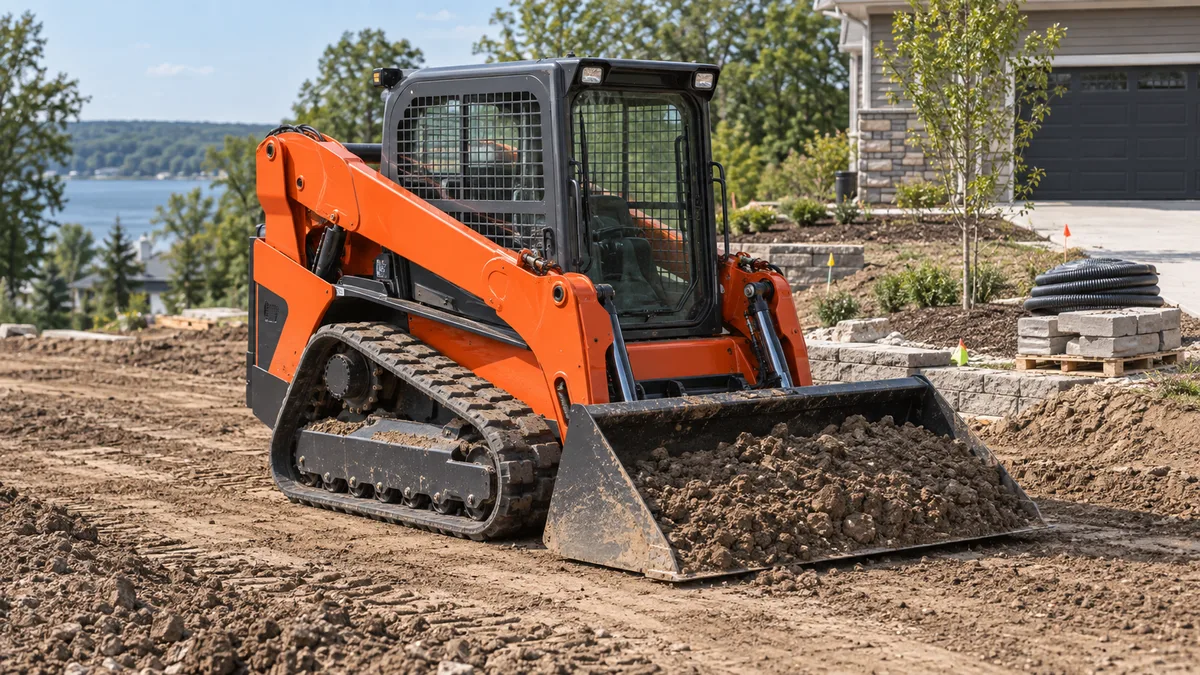
Kubota SVL75-3 vs Bobcat T76-2: the short answer
The Bobcat T76-2 lists more rated operating capacity than the Kubota SVL75-3 on the 35%-of-tipping-load basis: 2,900 lb versus 2,490 lb. Their optional high-flow figures are much closer, at 30.3 and 29.8 US gpm. The buying decision therefore changes with the job: load handling, attachment requirements and transport should be compared separately.
This comparison uses the Kubota US specification sheet and Bobcat North American T76-2 product data checked on October 28, 2026. It covers the T76-2, not an earlier T76. Values are manufacturer reference configurations, not a guarantee for a particular used machine.
Specifications on a matching basis
| Comparison point | Kubota SVL75-3 | Bobcat T76-2 |
|---|---|---|
| ROC at 35% tipping load | 2,490 lb | 2,900 lb, solid undercarriage |
| Reference operating weight | 9,420 lb, closed cab | 9,592 lb |
| Standard auxiliary flow | 19.2 US gpm | 23.3 US gpm |
| Optional high flow | 29.8 US gpm | 30.3 US gpm |
| Listed auxiliary pressure | 3,185 psi | 3,500 psi |
Kubota also publishes a 9,190 lb open-cab weight. Bobcat lists different ROC values for torsion suspension and counterweight configurations. Compare the exact undercarriage, cab, tracks, bucket and counterweight on the machines offered to you.
How large is the capacity difference?
The reference ROC difference is 410 lb, or about 16.5% of the Kubota value. That is a specification comparison, not a statement that every attachment can handle an extra 410 lb on the Bobcat. Fork load center, attachment weight, lift position and the approved attachment rating still control the actual task.
Ask a seller to quote both machines for the same work description: for example, handling the same pallet with the same type of forks on the same prepared surface. Record the permitted capacity from each approved fork chart. A bucket ROC number is not a substitute for a pallet-fork rating, particularly when the load sits farther forward.
High-flow similarity can hide a standard-flow difference
The optional high-flow gap is only 0.5 gpm. By contrast, the standard-flow gap is 4.1 gpm. Whether either difference matters depends on the attachment's documented operating window. An attachment approved for 18–22 gpm should not simply receive the full output of a higher-flow circuit. A tool asking for 28–32 gpm calls for a different hydraulic package from one requiring standard flow.
Pressure and return restrictions also matter. Do not treat the two machines as interchangeable carriers because both advertisements say “high flow.” Obtain the tool's minimum and maximum flow, required working pressure, return-pressure limit, case-drain requirement and electrical-control specification. Our standard-flow vs high-flow guide includes a downloadable matching worksheet.
Transport: compare the machine that will actually be hauled
The closed-cab reference weights differ by 172 lb. The Kubota cab choice alone changes its published weight by 230 lb, illustrating why a small brochure difference is not a reliable trailer-payload margin.
Build a haul inventory containing the actual loader, installed attachment, spare tool, chains, binders, fuel and other carried equipment. Confirm what the manufacturer's operating-weight basis already includes before adding items, then verify the loaded combination on a scale. Trailer payload, axle and tire ratings, hitch ratings and tow-vehicle limits must all be checked for the actual configuration.
A practical buying matrix
| Your recurring task | Decision to resolve before ordering |
|---|---|
| Pallets and bulky landscape materials | Compare approved fork charts and the real load center, rather than a 50% capacity advertisement against a 35% rating. |
| One existing hydraulic attachment | Start with that attachment's documented requirements and approved carriers. |
| Frequent towing between small jobs | Use actual scale weights and transport inventory for the offered machines. |
| Long days in the operator station | Arrange a demonstration covering visibility, entry, controls and attachment connection with your normal PPE. |
| Used purchase | Check undercarriage measurements, service records, hydraulic options and the exact model designation before comparing asking prices. |
Questions worth asking the dealer
Is high flow physically installed and enabled, or merely available for that model? Which counterweight and undercarriage are fitted? What bucket and operator allowance are included in the stated weight? Is your specific attachment approved, including its control harness and guarding? Request those answers in the written quotation so optional equipment does not disappear between the brochure and the machine delivered.
Continue with the SVL75-3 model page, T76-2 model page and 35% vs 50% ROC explanation.
Sources and calculation notes
- Kubota SVL75-3 US specifications: capacity, cab weights and auxiliary hydraulics.
- Bobcat T76-2 North American specifications: solid-undercarriage ROC, weight and hydraulics.
Percentage and weight differences are Heavy Equipment Hub calculations from those references. They are not measured productivity results, fuel tests or a dealer compatibility approval.


