
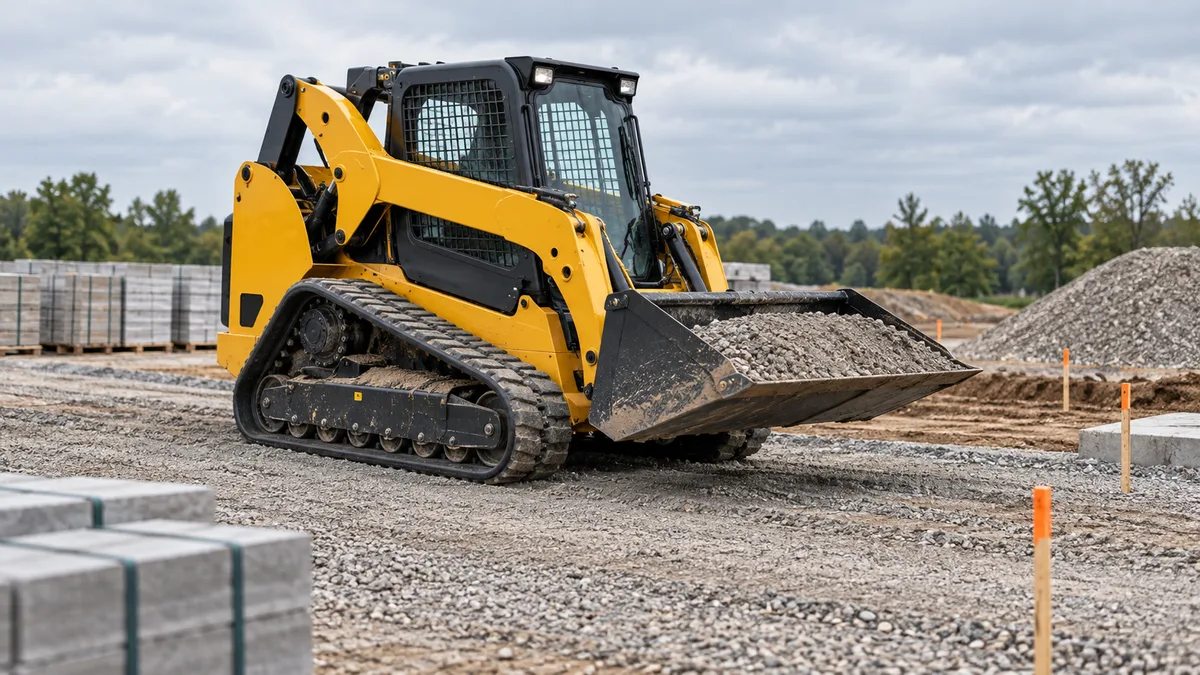
Cat 299D3 vs John Deere 333 P-Tier: compare capacity and hydraulic package first
On the referenced 35%-tipping-load basis, the John Deere 333 P-Tier lists 3,850 lb ROC and the Cat 299D3 lists 3,480 lb. Deere's optional auxiliary flow is 44 US gpm; Cat lists 32 US gpm for High Flow XPS. Those figures make hydraulic attachment selection an important part of the comparison, but they do not establish that every high-flow tool fits either machine.
This article compares the 299D3, not the 299D3 XE, against the 333 P-Tier, not the older 333G or the 335 P-Tier. Cat's US product page and Deere's eight-page 333 P-Tier brochure were checked on October 28, 2026.
Reference specification table
| Specification | Cat 299D3 | John Deere 333 P-Tier |
|---|---|---|
| Net engine power | 95 hp | 105.8 hp net peak |
| ROC, 35% basis | 3,480 lb | 3,850 lb |
| Reference operating weight | 11,464 lb | 12,183 lb |
| Standard auxiliary flow | 23 US gpm | 25 US gpm |
| Optional high flow | 32 US gpm, XPS | 44 US gpm |
| Pressure for listed packages | 3,335 psi standard; 4,061 psi XPS | 3,500 psi at couplers in the cited brochure |
Cat's reference configuration includes a specified bucket, enclosed cab, tracks and no optional counterweights. Deere's operating weight uses its stated standard-track configuration. Options and later specification revisions can change the comparison; use serial-specific documents for the actual offer.
What the differences mean in a quotation
Calculated from the reference figures, Deere has 370 lb more ROC and 719 lb more operating weight. That is about 10.6% more ROC and 6.3% more operating weight relative to the Cat. Those percentages describe the published configuration, not a measured change in production, stability on a slope or trailer suitability.
Make separate quotation lines for the loader, hydraulic package, bucket, counterweights, tracks, coupler and approved attachments. Comparing an equipped used Cat against an unequipped Deere base price can reverse an apparent price advantage once the required options are included.
Why 44 gpm is not automatically better than 32 gpm
A hypothetical attachment with a 30–35 gpm operating window makes the point. A 32 gpm carrier may fall within that flow window, while a 44 gpm package would require an approved setting that stays within the tool's limit. A different tool requiring 40–45 gpm would prompt a very different shortlist. These are illustrative requirements, not approval for any particular attachment.
Working pressure, case-drain routing, return backpressure, couplers, control electronics, cooling and machine guarding must also match. Ask for the exact carrier-and-tool combination in writing. Never increase relief pressure to make a mismatched attachment work. The hydraulic attachment matching guide explains the information to collect.
Use the same rating basis for lifting work
A sales sheet may show a 35% or a 50% figure. Use the same basis and configuration for both machines; a percentage label cannot be removed without changing the meaning of the comparison. For forks, obtain the approved rating at the relevant load center and lift position. Attachment weight and the actual load geometry are part of the decision.
For repeated pallet work, bring the dimensions and weight of the heaviest normal load to a dealer demonstration. For bucket work, describe the material and target truck or hopper. Neither horsepower nor a single ROC figure resolves reach, visibility and handling requirements on its own.
Compare transport as a separate cost
The 719 lb reference weight difference can matter on a combination with little remaining payload, but it should not be treated as a complete transport calculation. Use an inventory and scale weight for each actual combination, including the installed attachment and other tools. Check the tow vehicle, trailer, axles, tires, hitch and applicable local requirements.
A purchase that changes the required trailer, truck or delivery arrangement should carry those additional costs in the comparison. Enter them separately from fuel and service expense rather than burying them in an unexplained hourly number.
A two-job demonstration plan
| Demonstration | Record | Useful result |
|---|---|---|
| Your recurring loading task | Actual material or load, attachment, target height, completed cycles and operator observations | Whether reach, control and approved capacity suit the job |
| Your recurring hydraulic attachment task | Exact attachment, selected flow setting, working conditions and productive output | Whether the approved hydraulic package delivers useful production |
Use comparable operators, material and working conditions. A short dealer demonstration is an evaluation aid, not a controlled durability or fuel-economy test. Ask about local parts availability, service access and the service history of each offered unit alongside the demonstration results.
See the Cat 299D3 specifications, 333 P-Tier specifications and cold planer selection guide for related decisions.
Primary references and editorial basis
Differences, percentages and the example attachment windows are editorial calculations and illustrations. No ownership-cost winner or attachment approval is claimed from these specifications alone.


